

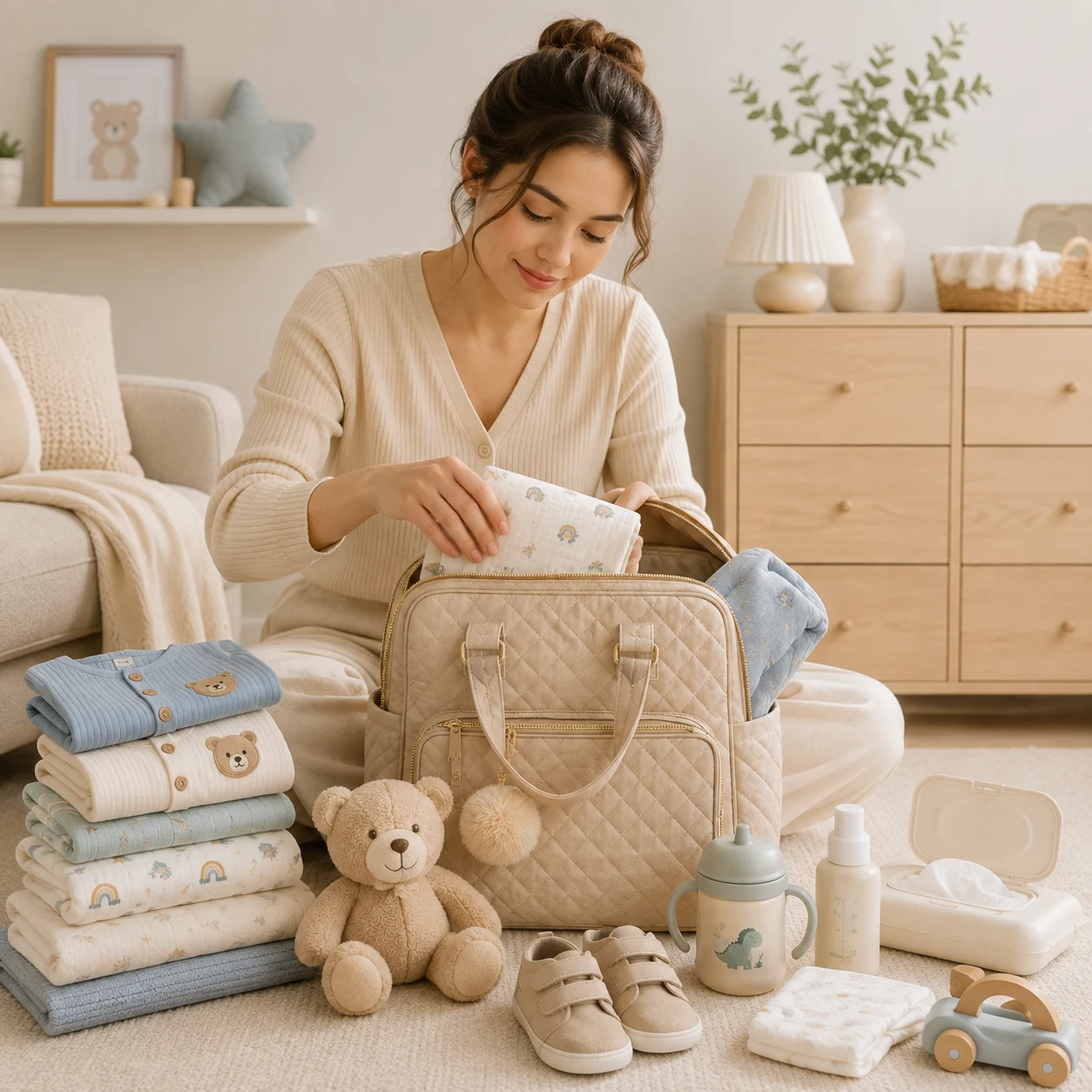
Learn what to consider when buying clothes for babies and toddlers, including fabric, fit, sizing, closures, seasons and everyday practicality.
Tiny jackets, colourful rompers and adorable matching outfits can be difficult to resist.
But when you’re choosing clothing that your baby or toddler will actually wear throughout the day, comfort and practicality matter just as much as appearance.
Here are some useful things to consider before adding the next outfit to their wardrobe.
Start With the Fabric
Fabric has direct contact with your child’s skin, so it’s one of the first things worth considering.
For everyday clothing, look for materials and constructions that feel comfortable against the skin and are suitable for the weather.
For warm conditions, breathable and lightweight garments may be more comfortable. During colder months, warmer layers such as sweaters and jackets can be added as appropriate.
Always check the garment’s actual fabric composition and care label rather than assuming the material from its appearance.
Choose the Right Fit
Children grow quickly, which can make sizing frustrating.
Clothes should generally allow comfortable movement without being excessively restrictive or impractically oversized.
When choosing a size, consider:
- Your child’s current measurements
- The manufacturer’s size chart
- The garment’s cut
- Whether it will be worn over other layers
- How quickly your child is currently growing
Age labels can be helpful, but two children of the same age can have very different measurements.
Make Changing Easier
A beautiful outfit becomes much less appealing after the third difficult diaper change of the day.
For babies, look for practical features such as:
- Convenient snap or button placement
- Accessible diaper openings
- Comfortable neck openings
- Easy-to-use closures
- Designs that don’t require unnecessary effort to put on
For active toddlers, clothes that are straightforward to put on and remove can also support growing independence.
Think About Movement
Babies stretch, roll and crawl. Toddlers seem determined to test every possible direction in which the human body can move.
Their clothing needs to accommodate that activity.
When assessing an outfit, think about whether your child can comfortably:
- Sit
- Crawl
- Walk
- Bend
- Reach
- Play
Everyday clothes shouldn’t unnecessarily restrict normal movement.
Dress for the Weather
Instead of relying on one heavy garment for every situation, practical layering can make it easier to adjust clothing as conditions change.
Depending on your climate, a wardrobe might include:
Warm weather:
Lightweight tops, T-shirts, rompers and breathable bottoms.
Mild weather:
Comfortable everyday clothing with a light additional layer available.
Cooler weather:
Sweaters, jackets, socks and suitable outer layers.
When dressing babies, monitor their comfort rather than assuming that more layers are always better.
Don’t Overlook Socks, Caps and Accessories
Small accessories can make a significant difference when they’re actually needed.
Depending on age, weather and activity, you may consider:
- Socks
- Booties or footwear
- Caps
- Mittens
- Appropriate cold-weather accessories
For babies and young children, inspect clothing and accessories for loose or detachable components and follow applicable product age and safety guidance.
Build Around Everyday Basics
Children don’t need every outfit to be a special-occasion outfit.
A practical wardrobe usually starts with versatile basics that can be mixed and matched.
Consider keeping a selection of:
- T-shirts
- Bodysuits
- Rompers
- Comfortable bottoms
- Sleepsuits
- Socks
- Seasonal layers
You can then add dressier outfits, jackets and accessories according to your needs.
Consider Washing and Care
Children’s clothing gets washed frequently.
Before purchasing, check the care instructions. A garment that requires complicated maintenance may not be the most convenient option for everyday wear.
Also consider whether colours, prints, closures and decorative details are suitable for frequent use and cleaning.
Following the manufacturer’s washing instructions can help maintain the garment’s shape and appearance.
When Should You Move to the Next Size?
There isn’t one universal schedule.
Signs that clothing may be becoming too small include restricted movement, tight openings, closures that are difficult to fasten or garments that no longer fit as intended.
Regularly check the fit rather than relying exclusively on the age printed on the label.
Comfort First, Style Alongside It
Parents don’t have to choose between practical and attractive clothing.
The best everyday wardrobe combines both.
Start with fit, fabric, movement and convenience. Once those requirements are satisfied, colours, prints and styling can make dressing your little one much more fun.